

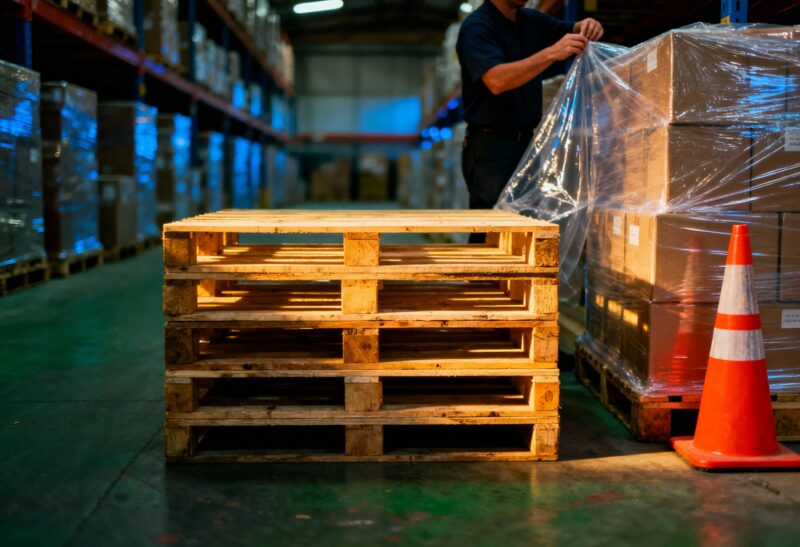
For eCommerce businesses shipping palletized inventory, warehouse space directly affects fulfillment speed, storage costs and inventory control. Poor pallet organization leads to slow order processing, higher storage fees and limited flexibility during sales peaks. A structured pallet management approach helps online brands move inventory faster while keeping warehousing costs under control.
Faster Order Processing Through Better Pallet Visibility

When pallets are easy to locate and track, orders move through fulfillment faster. Clear pallet visibility allows warehouse teams to access inventory without delays, reducing picking time and minimizing handling errors.
Tracking systems connected to warehouse management software provide real-time insight into pallet locations, movement history and dwell time. For eCommerce brands, this translates into faster order turnaround, fewer stock discrepancies and more reliable shipping timelines during promotions and high-volume periods.
Better pallet visibility also reduces labor hours spent searching for inventory, directly lowering fulfillment costs.
Using Vertical Storage to Control Storage Costs
Storage fees often scale with occupied space. Vertical pallet storage allows eCommerce businesses to store more inventory within the same footprint, keeping monthly storage costs predictable as order volume grows.
Racking systems designed for palletized goods help maximize usable space while maintaining safe and efficient access. High-turn SKUs can be positioned for quick retrieval, while slower-moving inventory is stored higher without disrupting daily operations.
Efficient vertical storage helps online sellers maintain inventory availability without committing to larger warehouse footprints.
Standardized Pallets Improve Fulfillment Accuracy
Consistent pallet sizes simplify warehouse operations. Standard pallets fit racking systems properly, move smoothly through forklifts and conveyors and reduce the risk of product damage.
For eCommerce brands, pallet standardization improves inventory accuracy and reduces handling issues that cause shipment delays. It also supports smoother inbound receiving and outbound shipping, especially when working with multiple suppliers or fulfillment centers.
Standardized pallets help fulfillment teams process orders faster and maintain consistent service levels across sales channels.
Preventing Delays Through Pallet Maintenance
Damaged pallets create delays, safety issues and inefficient use of warehouse space. Regular pallet inspection and repair help keep inventory flowing without interruption.
For eCommerce operations, pallet maintenance reduces the risk of order delays caused by repacking, product damage or blocked access to inventory. This results in fewer fulfillment exceptions and more consistent delivery performance.
Well-maintained pallets also support safer warehouse operations, minimizing disruptions during peak seasons.
Reducing Non-Revenue Storage With Pallet Pooling
Empty pallets take up valuable warehouse space that could otherwise hold sellable inventory. Pallet pooling and rental programs allow eCommerce businesses to reduce on-site pallet storage and pay only for pallets when needed.
These programs are especially useful for seasonal businesses and brands experiencing demand fluctuations. By reducing empty pallet storage, businesses free up space for active inventory and maintain flexibility without long-term commitments.
Pallet pooling supports scalable fulfillment while keeping storage costs aligned with sales volume.
Why Pallet Strategy Matters for eCommerce Growth
Efficient pallet management directly supports faster fulfillment, lower storage costs and improved inventory accuracy. For eCommerce brands shipping at scale, these advantages translate into better customer experience, fewer operational bottlenecks and more predictable logistics expenses.
Optimizing pallet storage helps online sellers handle growth without expanding warehouse space prematurely. It allows businesses to stay responsive during promotions, seasonal spikes and product launches while maintaining control over fulfillment performance.
Need a more efficient way to store palletized inventory?